You've just been served with a North Carolina Chapter 50B domestic violence protective order. You may be standing at work, in your driveway, or outside the courthouse, trying to understand whether the handgun in your bedroom, the rifle at a parent's house, or the ammunition in your truck must be turned over. The answer may be yes, and the clock may already be running.
Firearm surrender under a 50B order in North Carolina is not a routine property handoff. A mistake can create separate criminal exposure, complicate your protective-order case, and affect whether you can lawfully recover the firearms later. Treat the order as an immediate legal problem, contact the sheriff promptly, preserve your records, and get case-specific advice before moving or retrieving any weapon.
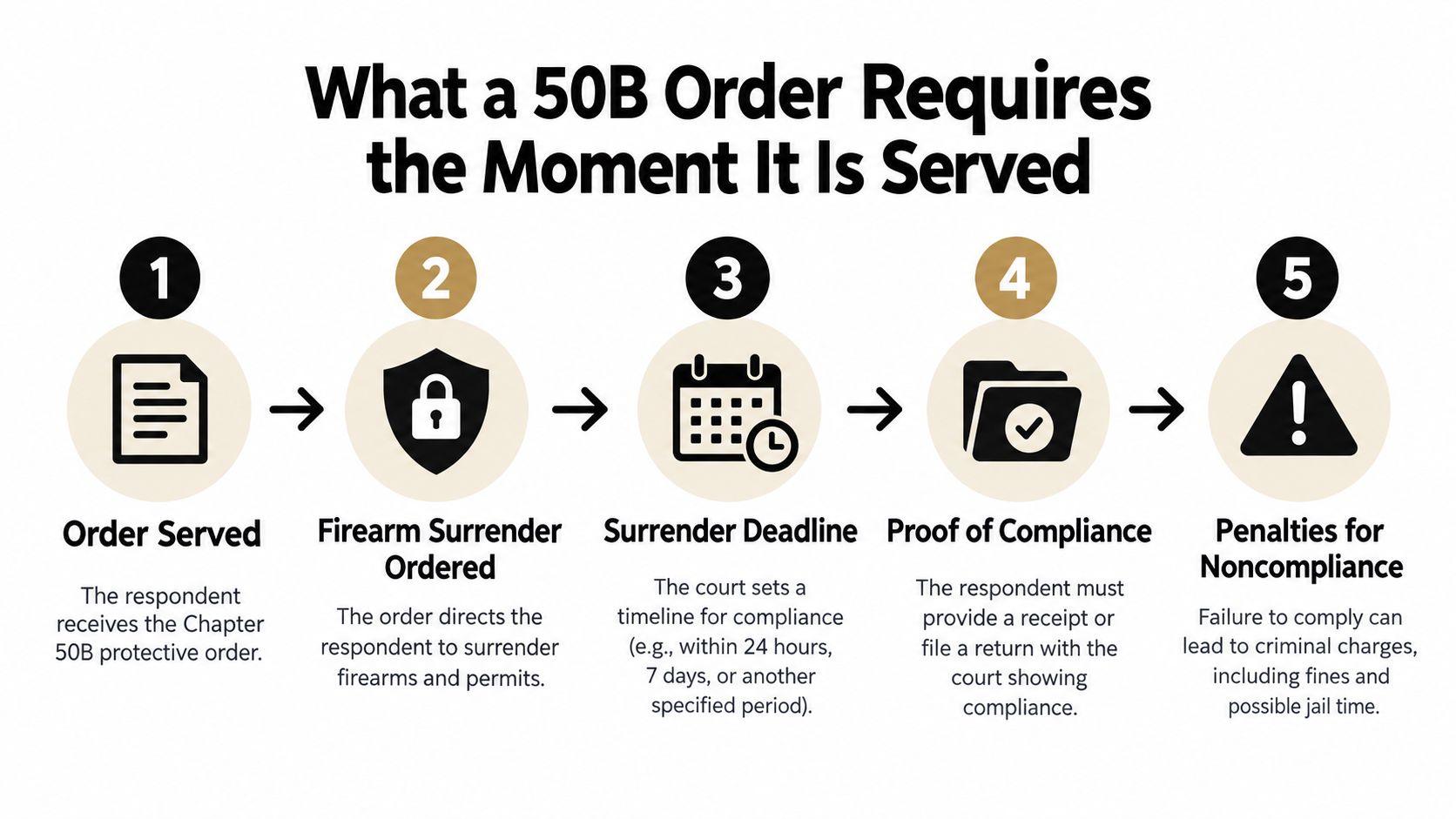
What a 50B Order Requires the Moment It Is Served
A Chapter 50B order doesn't automatically create the same firearm obligation in every case. The surrender requirement is triggered most directly when the court finds specified high-risk facts in an emergency or ex parte order. Those findings include that the defendant used or threatened to use a deadly weapon, has a pattern of violence involving a firearm, or threatened to seriously injure or kill the protected person or a minor child. The governing statute is North Carolina's Chapter 50B firearm-surrender provision.
When the qualifying order applies, it reaches every firearm, machine gun, and item of ammunition within your care, custody, possession, ownership, or control. It also covers a permit to purchase firearms and a permit to carry concealed firearms. Those words are broader than “guns registered in your name.” A firearm in your locked closet, a gun in your vehicle, or a rifle stored at a relative's home may still be covered if you can access or control it.
The deadline starts with service
The normal rule is immediate surrender upon service. If immediate handover isn't possible, the statute requires surrender to the sheriff within 24 hours, at the time and place specified by the sheriff. That 24-hour period is a compliance deadline, not a grace period during which you may continue possessing or using the firearms.
The sheriff stores the firearms or arranges storage with a licensed firearms dealer. Don't wait for the domestic-violence hearing, and don't assume that putting a weapon in a locked vehicle solves the problem. Your first-day conduct will shape the record about whether you tried to comply, what you disclosed, and whether any later possession was deliberate.
For a plain-language overview of the broader order, review North Carolina 50B order information, then speak with a North Carolina attorney about the exact language in your signed order.
Who Can Legally Accept Your Surrendered Firearms
Start with the sheriff identified by the order or the sheriff's office directing the surrender. North Carolina law places the surrender process with the sheriff, who must store the covered firearms or arrange storage with a licensed firearms dealer. A dealer is not a substitute you choose independently. The sheriff must be involved in that storage arrangement.
In narrow circumstances, a court-approved transfer to an eligible third party may be possible. Don't create that arrangement yourself. A spouse, parent, sibling, or friend holding the firearm doesn't automatically remove your possession or control, and an informal handoff may leave you exposed while creating risk for the person holding the gun.
What to say when you call
Keep the call short and factual:
“I've been served with a Chapter 50B order that addresses firearm surrender. I need instructions for immediate surrender, including the location, time, transportation procedure, and documents I should bring.”
Ask for the employee's name, the case or incident number, and written confirmation of the appointment or instructions if the office provides it. Don't volunteer a narrative about the underlying allegations. The sheriff's office is coordinating custody of property, not deciding your defense.
A clean surrender file should contain:
- A receipt: Keep the sheriff's or dealer's written acknowledgment.
- An inventory: Confirm that the list identifies each firearm, ammunition, and permit surrendered.
- A case reference: Attach the 50B case number or incident number to your records.
- A communication log: Save emails, appointment details, and the names of people you contacted.
If your dispute also involves children, the North Carolina Custody Process and Mediation materials address how a custody case proceeds, including mandatory custody mediation. That process is separate from firearm surrender, so don't assume a custody conversation changes the sheriff's requirements.
A Realistic Surrender Scenario and How to Handle It
Consider a common Friday problem. You're served at work in the afternoon. A handgun is in a bedside safe at home, a hunting rifle is at your parent's house in another county, and a shotgun is jointly used with your spouse. You need to treat all four facts as relevant immediately, not decide that only the handgun “belongs” to you.
Call the sheriff's office first. Explain that the order requires firearm surrender and identify the locations without moving the weapons. Ask how the sheriff wants the handgun and ammunition brought in, whether an officer will receive them, and how the rifle in the other county should be coordinated. For the shotgun, disclose the joint ownership or shared use and ask for lawful instructions. Don't ask your spouse or parent to move the items on their own before the sheriff gives direction.
The statute reaches property in your care, custody, possession, ownership, or control. That means inconvenience, distance, and shared ownership don't justify partial compliance. A rifle at a parent's house may still be within your control if you can retrieve it. A shared shotgun can present the same problem if you retain access or authority over it.
There's an important distinction between voluntary surrender and a search. North Carolina appellate authority, summarized by the UNC School of Government, states that a domestic-violence protective order doesn't itself authorize officers to search for undisclosed guns. That doesn't give you permission to conceal firearms. It means you should promptly disclose the locations and obtain lawful surrender instructions rather than conduct an improvised transfer or expect officers to search your home.
At the appointment, bring the signed order, identification if requested, the inventory you prepared, and any prior firearm records that help identify the property. Leave with a receipt that lists what was accepted. Keep photographs of the receipt and inventory, along with your call log, because those documents may matter when the order expires or if anyone later claims you failed to surrender an item.
What Counts as Continued Possession or Control
The most dangerous misunderstanding is believing that a firearm stops being yours legally once it's out of your hand. Under the order, possession and control can be broader than physical contact. A gun locked in your home safe may remain under your control. A firearm in your vehicle may remain accessible to you. A rifle at a relative's property may still create a problem if you can direct its use or retrieve it.
The statute separately prohibits possessing, purchasing, or receiving covered firearms, ammunition, or permits while the prohibition remains in effect. A violation of the applicable prohibition is classified as a Class H felony under the cited statutory text. That means a firearm-surrender problem can become a new felony matter, separate from the allegations supporting the 50B case.
Conduct that creates avoidable exposure
These actions are especially risky:
- Buying ammunition: An online order or store purchase can be treated as receiving ammunition while the prohibition remains active.
- Retrieving a firearm: Driving to another county to pick up a rifle can create possession or control concerns even if the sheriff never physically held it.
- Keeping access: Giving a friend the gun while retaining the ability to direct, access, or recover it may not solve the legal issue.
- Using a vehicle as storage: A locked trunk can still be your possession or control if you can access the vehicle and weapon.
- Assuming shared ownership is safe: A jointly owned firearm doesn't become exempt because another person also owns it.
The safest reading of the order is simple: remove every firearm, machine gun, item of ammunition, and covered permit from your possession and control through a sheriff-directed process.
That rule matters in the Friday scenario. The handgun at home, rifle at the parent's house, and shared shotgun must be addressed together. Leaving one item behind because it's inconvenient can undermine the compliance argument you're trying to build.
Federal law creates a separate layer
Federal law adds another restriction. Under 18 U.S.C. § 922(g)(8), a person subject to a qualifying court order involving an intimate partner generally may not possess, ship, transport, or receive firearms or ammunition while the order remains in effect. North Carolina materials explain that this federal prohibition may apply even when the state order doesn't expressly contain a firearm-possession prohibition. The North Carolina Bar Association's domestic-violence and federal gun-control materials describe that overlap.
That creates practical federal risk if you buy ammunition online, retrieve a gun from another location, transport a firearm, or continue possessing a weapon the sheriff never physically took. State compliance doesn't automatically eliminate federal exposure, and federal compliance doesn't replace the state surrender procedure.
Don't test the boundary yourself. Before you retrieve, transfer, purchase, ship, transport, or receive any firearm or ammunition, obtain case-specific advice. A related protective-order dispute may also involve North Carolina restraining-order law. If the larger family case includes divorce, How to File for Absolute Divorce in North Carolina addresses the steps, residency rule, and filing requirements for an NC divorce, but divorce planning doesn't suspend the firearm restriction.
How to Get Your Firearms Back After the Order Ends
Surrender is not the end of the property issue. It's the beginning of a second process that requires timing, documentation, and a legal eligibility review.
North Carolina's framework permits a return request after the protective order expires or after final disposition of qualifying criminal charges, generally no later than 90 days afterward. The Judicial Branch procedure requires a motion for return, not an informal pickup. Court forms require item identification and provide notice to the plaintiff and sheriff. Before filing, confirm that the current form and statutory procedure apply to your case.
Return is not automatic
A court or sheriff may not release the firearms if a state or federal prohibition still applies, qualifying criminal matters remain unresolved, or the requested recipient can't lawfully possess them. You may need to seek a court order, request transfer to an eligible third party, or wait for administrative release. Those choices depend on the order, the criminal case, the recipient's eligibility, and the county's procedures.
Catawba County illustrates why local verification matters. The county states that returns are appointment-only, may require a judge's authorization, and charge $5 per firearm per month for storage. It also warns that the sheriff may petition for destruction if the owner doesn't contact the office within 90 days after expiration. These practices show why “the order expired, so my guns automatically come back” is unsafe advice. The UNC School of Government discussion of surrender, return, and disposal explains the broader procedural issues.
NC 50B Firearm Surrender and Return at a Glance
| Stage | NC Rule | Practical Action | Common Mistake |
|---|---|---|---|
| Service | Surrender is immediate when possible | Read the signed order and contact the sheriff | Treating 24 hours as permission to keep using the gun |
| Sheriff coordination | If immediate handover isn't possible, surrender occurs within 24 hours at the sheriff's specified time and place | Get instructions before moving firearms | Choosing an informal handoff |
| Storage | The sheriff stores the property or arranges licensed-dealer storage | Obtain an itemized receipt | Leaving without proof |
| Expiration or charge resolution | A return request may become available after the required event | Confirm eligibility and current forms | Assuming release is automatic |
| Motion for return | Judicial Branch procedures require a motion with item identification and notice | Calendar the post-expiration deadline | Waiting until the deadline is close |
| County release | Local rules may require appointments, authorization, or fees | Call the specific sheriff's office | Assuming every county follows the same logistics |
Your Same-Day Compliance Checklist
Run this checklist before the first day ends. If you can't complete an item, document why and keep trying through the proper channel.
Confirm the order. Read every page of the signed Chapter 50B order. Verify whether it expressly addresses firearms and whether the language matches the current form used in your case. Don't rely on what someone told you in the hallway.
Contact the sheriff. State that you were served with a firearm-surrender order. Ask for the surrender location, time, transportation instructions, and any required appointment.
Inventory everything. List firearms, machine guns, ammunition, permits, storage locations, vehicles, relatives' homes, and jointly owned items. Compare the list with your actual records, not just what you remember seeing recently.
Follow the sheriff's process. Don't hide, sell, loan, transport, or relocate a firearm to avoid surrender. If an item is outside the county, tell the sheriff and request coordinated instructions.
Get proof. Leave with an itemized receipt or other written acknowledgment. Save the case number, incident number, emails, and names of the people who gave you instructions.
Calendar the next deadlines. Mark the order's expiration date and the 90-day post-expiration return deadline. Also note any criminal case dates that may affect eligibility.
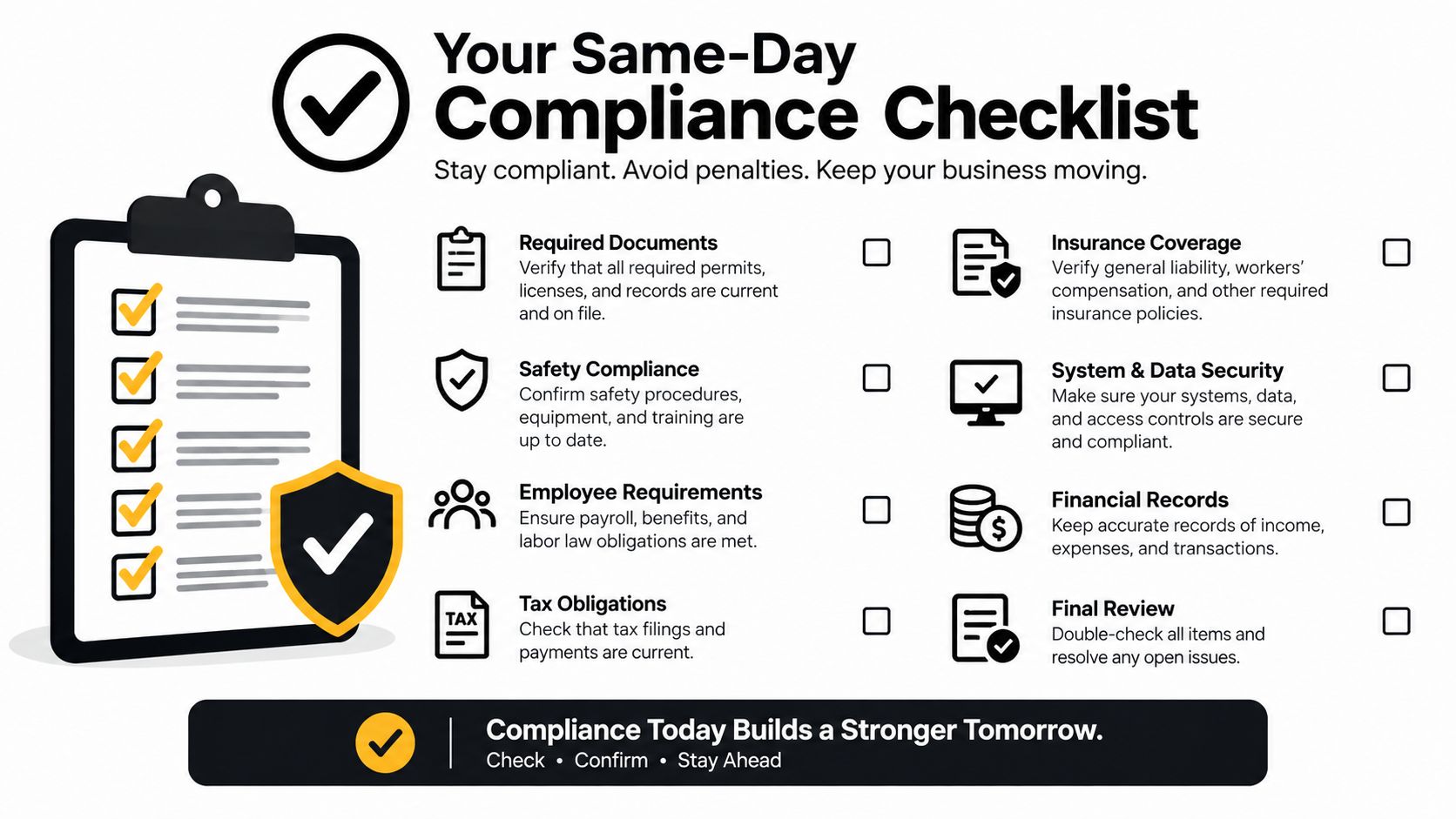
Start here: Confirm the signed order, call the sheriff, and inventory every firearm and round within your care, custody, possession, ownership, or control.
Don't purchase ammunition, retrieve a weapon, or arrange a private transfer while the order is active. Call a North Carolina protective-order attorney promptly if the order is unclear, a firearm is stored outside the county, the inventory is incomplete, or a criminal charge is pending.
Common Questions About NC Firearm Surrender
What if my firearm is stored in another North Carolina county?
Tell the sheriff handling the surrender immediately. Don't drive across county lines to retrieve the gun without instructions, and don't assume the other county's office will accept it without coordination. The weapon's location doesn't erase your possible control over it. Case-specific advice may change the safest procedure.
What happens to a firearm jointly owned with my spouse?
Shared ownership doesn't automatically remove the firearm from the surrender obligation if it remains within your possession or control. Disclose it, identify the ownership issue, and ask the sheriff or court for a lawful arrangement. Your spouse should not take it from you as an informal solution.
When should I file a motion to get the firearm back?
Review the order's expiration, any qualifying criminal charges, and the current Judicial Branch procedure. A return request requires a motion, item identification, and notice to the plaintiff and sheriff, and the applicable framework generally gives no later than 90 days after expiration for the request. Gather the surrender receipt and final case documents before asking for release.
Can the order be modified or vacated early?
You may have grounds to seek modification or an earlier ending, but filing a motion doesn't automatically suspend the firearm restriction. Until a court changes the order and the change is legally effective, follow the existing surrender and possession terms. A dispute about alleged noncompliance can also lead to a North Carolina contempt-of-court issue, so obtain advice before acting.
Does the 24-hour period let me keep using the firearm?
No. Immediate surrender is the rule when possible. The 24-hour period applies when immediate surrender isn't possible and identifies the outside surrender period under the sheriff's specified instructions. It isn't a period for continued possession, use, purchase, or receipt of firearms or ammunition.
Law Office of Bryan Fagan handles North Carolina protective-order, family-law, and criminal-defense matters, including the practical problems created by firearm surrender, storage, and return. If you've been served with a 50B order, contact the Law Office of Bryan Fagan to schedule a consultation before you move, retrieve, transfer, or purchase anything related to the firearms.